A customer once pushed me to drop the price from $5 to $3.3. I had to reduce wall thickness and skip the copper plating. Three months later, he complained the bottle wasn't hot enough after 6 hours.
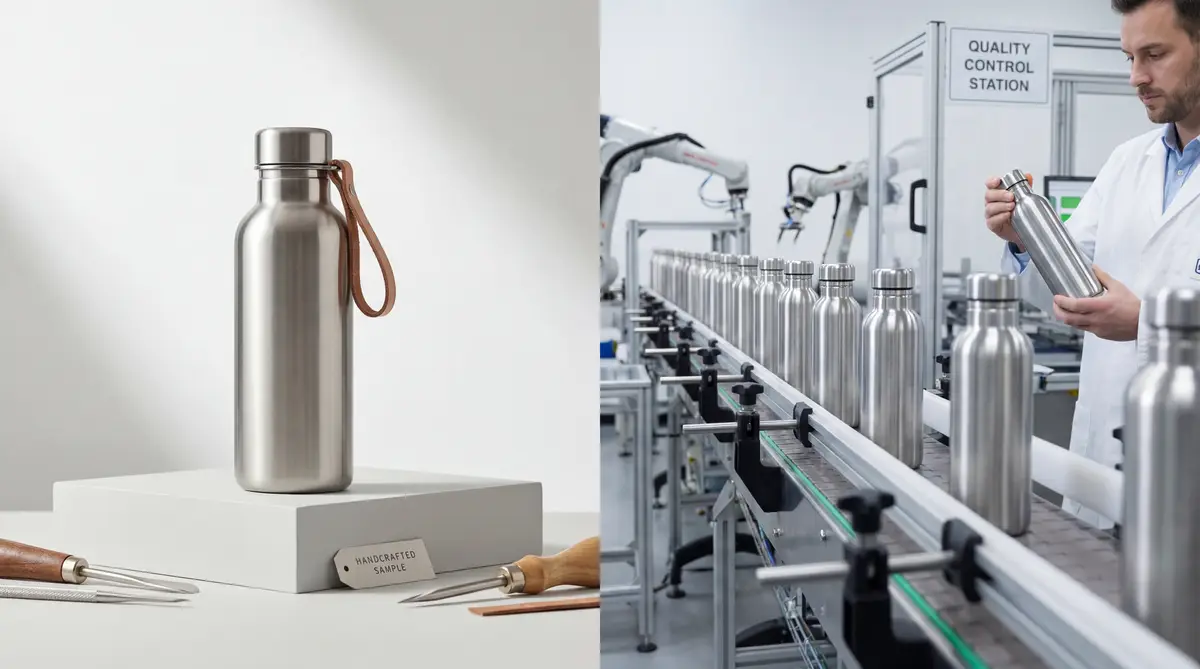
Samples and mass production differ because of time and attention. A sample gets one hour of focus on one piece. Mass production spreads that hour across five pieces. This is not cheating. This is how manufacturing works. The key is controlling the gap through pre-production samples and bulk samples.
I have been exporting stainless steel bottles for over 10 years. I have seen this confusion many times. New buyers expect their 10,000-piece order to look exactly like the single sample they approved. That expectation is not realistic. But with the right process, you can keep differences within acceptable limits.
Samples receive more attention per unit than mass productionTrue
Workers spend 60+ minutes on one sample versus 10-15 minutes per unit in bulk production.
Quality differences always mean the factory cheated youFalse
Most variations come from normal manufacturing physics, not dishonesty. Scale changes everything.
Why Do Samples and Mass Production Look Different?
Many buyers feel cheated when their bulk order looks slightly different from the sample. They think the factory switched materials or cut corners. Most of the time, this is not true.
Samples get special treatment. Workers check every step. They adjust colors carefully. They inspect each weld. Mass production cannot work this way. The factory must balance speed and quality across thousands of units. Small variations are normal.
The Math Behind Quality Differences
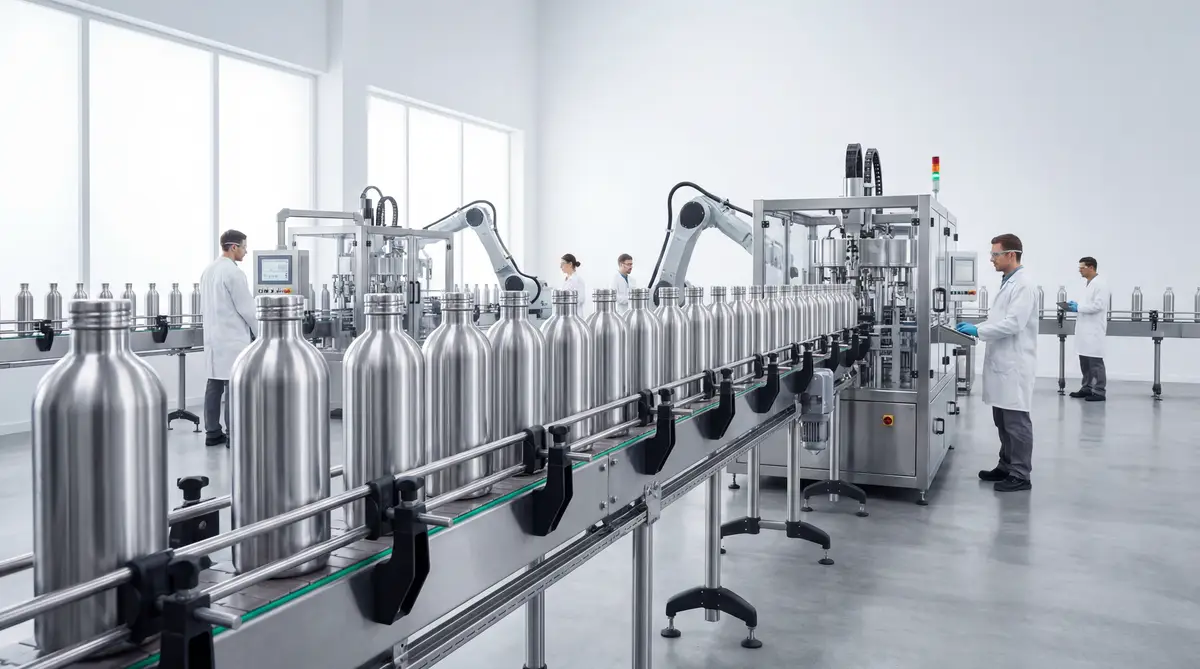
Think about it this way. Making one sample takes one hour of focused work. Making five bottles in one hour means each gets 12 minutes. The worker cannot check every detail the same way.
| Aspect | Sample Production | Mass Production |
|---|---|---|
| Time per unit | 60+ minutes | 10-15 minutes |
| Inspection points | Every step | Key checkpoints |
| Adjustment flexibility | High | Limited |
| Worker attention | Full focus | Divided |
| Defect tolerance | Near zero | Within AQL |
Human and Machine Factors
Production lines have human workers and machines. Both can cause small variations. A worker might feel tired after 8 hours. A machine mold might shift slightly after 1,000 cycles. These changes are tiny. But they add up across a large order.
Brand customers from Europe and America understand this. They set clear tolerance ranges based on international quality standards1. For example, logo position can vary by 3mm. Beyond 4mm, they reject the piece. This is not about perfection. It is about acceptable limits.
When you evaluate a supplier's sample quality2, remember that the sample represents best-case production. Your bulk order will have more variation. That is normal.
Production line variations are unavoidable in manufacturingTrue
Human fatigue and machine wear create micro-variations across thousands of units.
European brands accept zero defects in bulk ordersFalse
Even strict brands use AQL standards that allow small defect percentages.
What Are the Most Common Quality Differences?
Not all quality gaps are equal. Some are cosmetic. Some affect function. Knowing the difference helps you set the right priorities.
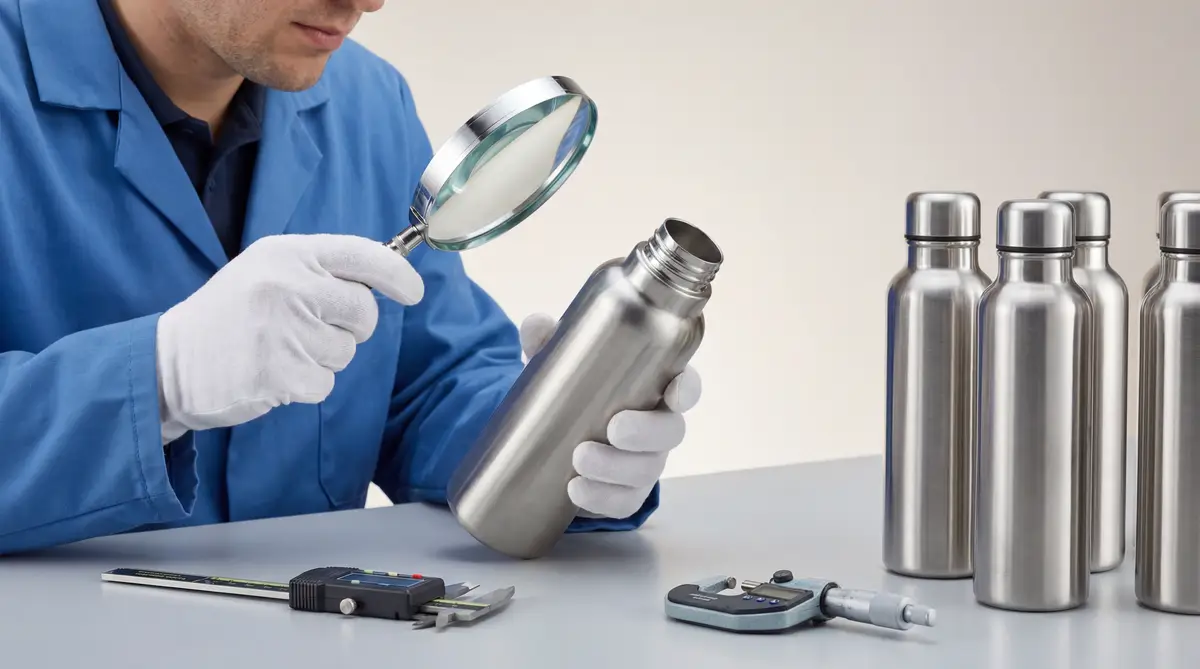
The most common differences are color variation, logo defects, packaging errors, insulation performance drops, and leaking. Color and logo issues are visible but fixable. Leaking is serious and needs immediate action.
Breaking Down Each Type
| Defect Type | Cause | Severity | Fix Difficulty |
|---|---|---|---|
| Color variation | Rush production, color not calibrated | Medium | Respray needed |
| Logo defects | Printing machine issues | Medium | Strip and reprint |
| Packaging errors | Wrong box printing | Low | Reprint boxes |
| Insulation drop | Normal production variance | Medium | Cannot fix easily |
| Leaking | Thin gasket, thread mismatch | High | Replace parts |
The Leaking Problem
Leaking deserves special attention. A bottle leaks when the gasket is too thin or the threads do not align perfectly. The difference can be just a few silk (0.01mm). You cannot see it. But hot water will find the gap.
I had a customer who received 5,000 bottles. About 2% leaked. The cause was a thread mold that shifted after 3,000 pieces. We replaced all leaking units. Understanding how bottle threads work3 helps you spot potential issues early.
Insulation Performance Reality
Many buyers test insulation by touching the bottle after 6 hours. If it is not burning hot, they complain. But the national standard says 40-50°C after 6 hours is normal. That feels warm, not hot.
Wide-mouth bottles lose heat faster than narrow-mouth ones. The opening is bigger. More heat escapes. A $3.3 bottle without copper plating will not perform like a $6 bottle with full insulation features. The vacuum insulation manufacturing process4 directly affects performance. Price affects performance. This is basic physics.
Leaking defects are more serious than color variationsTrue
Color issues are cosmetic and fixable. Leaking affects product function and customer safety.
All insulated bottles should stay hot for 12+ hoursFalse
Performance depends on design, materials, and price point. 6-hour retention at 40-50°C meets standards.
How Can You Prevent Quality Gaps Before Production?
Prevention is better than complaints. The industry has a standard system for this. It involves two confirmation steps before full production starts.
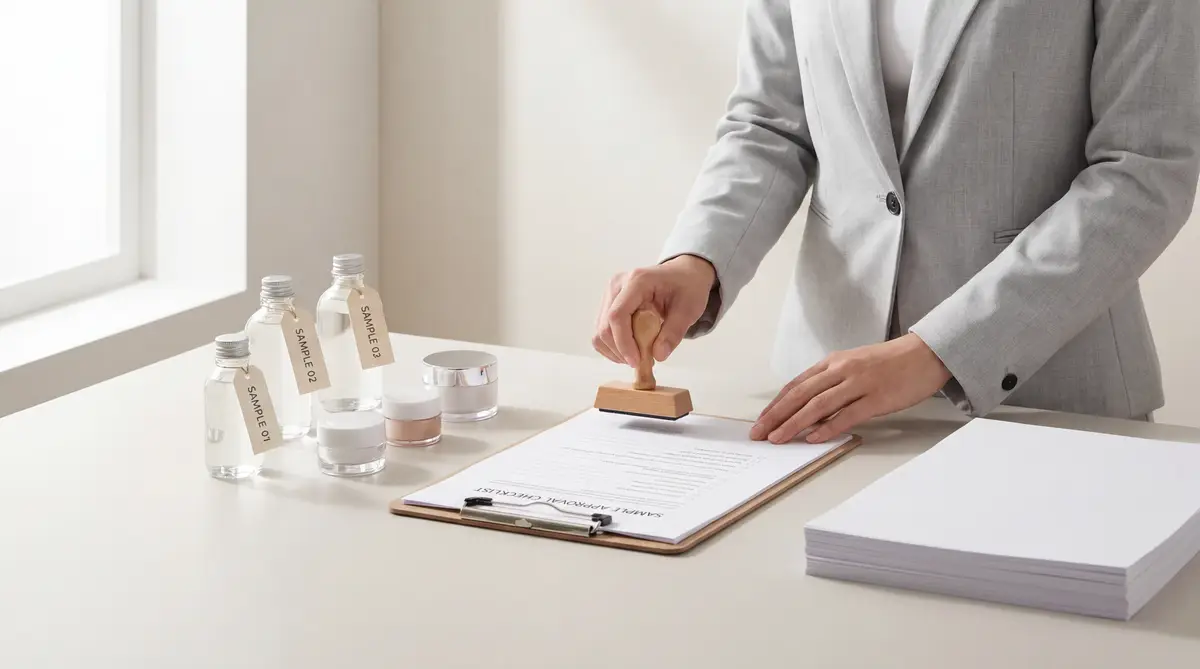
Use two checkpoints: pre-production sample and bulk sample. The pre-production sample confirms design and materials. The bulk sample confirms the production line is set up correctly. Both must pass before you approve mass production.
The Two-Sample System
| Stage | What It Checks | When It Happens |
|---|---|---|
| Pre-production sample | Design, color, materials, dimensions | Before production starts |
| Bulk sample | Production line setup, consistency | After first 100-500 pieces |
A Real Example
I had a customer order purple bottles. The initial sample looked perfect. But when we made the first bulk sample, the purple shade was off. The spray gun needed adjustment.
We stopped production. Fixed the color. Made another bulk sample. Customer approved. Then we continued with the full order. No problems after that.
This is why the two-sample system works. It catches issues before they multiply across thousands of units. When you find a reliable factory5, they will follow this process automatically.
What to Include in Your Contract
Your purchase contract should specify:
- Pre-production sample approval required
- Bulk sample approval required
- Acceptable tolerance ranges (color, dimensions, logo position)
- Inspection method (AQL level6, sample size)
- Defect handling procedure
Most professional factories include these terms by default. If a supplier resists these checkpoints, consider that a warning sign. Learning how to source quality drinkware7 includes understanding these contract basics.
Two-stage sample approval catches most quality issuesTrue
Pre-production and bulk samples verify both design and production line setup before full runs.
Verbal agreements are enough for quality standardsFalse
Written contracts with specific tolerances protect both buyer and supplier from disputes.
What Should You Do When Quality Doesn't Match?
Even with good prevention, some orders will have issues. How you handle them matters for your business relationship and your bottom line.
When quality doesn't match, document everything with photos and measurements. Contact your supplier immediately. Discuss whether to rework, replace, or discount. Keep expectations realistic. A $3 product cannot have $6 quality.

The Response Process
| Step | Action | Timeline |
|---|---|---|
| 1 | Document defects with photos | Within 48 hours of receiving |
| 2 | Send formal quality report | Within 1 week |
| 3 | Supplier investigation | 3-5 business days |
| 4 | Agree on solution | Within 2 weeks |
| 5 | Execute solution | Depends on agreement |
Realistic Expectations
I need to be direct here. If you pushed hard on price, you gave up some quality margin. The customer who paid $3.3 instead of $5 lost wall thickness and copper plating. When he complained about insulation, I explained the physics. I offered to send replacements at my cost. He stopped responding.
Some quality gaps come from your own choices. Experienced wholesalers know this. They have seen thousands of products. They accept small variations. New buyers often expect perfection at budget prices. That combination does not exist. Understanding why some factories quote lower8 helps set realistic expectations.
When to Walk Away
Not every supplier relationship is worth saving. If a supplier:
- Denies obvious defects
- Refuses to follow the two-sample process
- Blames you for their production issues
- Cannot explain what went wrong
Then find a new supplier. But if they acknowledge problems, explain causes, and offer fair solutions, that is a partner worth keeping. Good suppliers follow industry best practices for handling claims9.
Professional third-party inspection services like SGS10 can help verify quality before shipment if you want extra assurance.
Documentation within 48 hours strengthens your claimTrue
Quick documentation with photos proves defects existed on arrival, not from your handling.
Pushing for lowest price has no effect on qualityFalse
Price cuts require material or process compromises. You get what you pay for.
Conclusion
Sample and mass production quality will always differ slightly. This is manufacturing reality, not supplier dishonesty. Use pre-production and bulk samples to catch problems early. Set realistic expectations based on your price point. When issues happen, document them and communicate clearly. The goal is not perfection. The goal is acceptable quality at your target price.
-
ISO 2859-1 defines acceptance sampling procedures used globally for quality inspection ↩
-
Comprehensive guide to evaluating supplier samples before placing bulk orders ↩
-
Understanding thread specifications helps identify potential leaking issues ↩
-
Vacuum insulation manufacturing directly impacts thermal performance ↩
-
Key factors for identifying reliable manufacturing partners in China ↩
-
ASQ explains Acceptable Quality Level standards used in manufacturing ↩
-
Step-by-step guide to sourcing quality stainless steel drinkware ↩
-
Understanding pricing factors helps set realistic quality expectations ↩
-
Best practices for handling quality claims and returns in B2B orders ↩
-
SGS provides independent third-party inspection services worldwide ↩