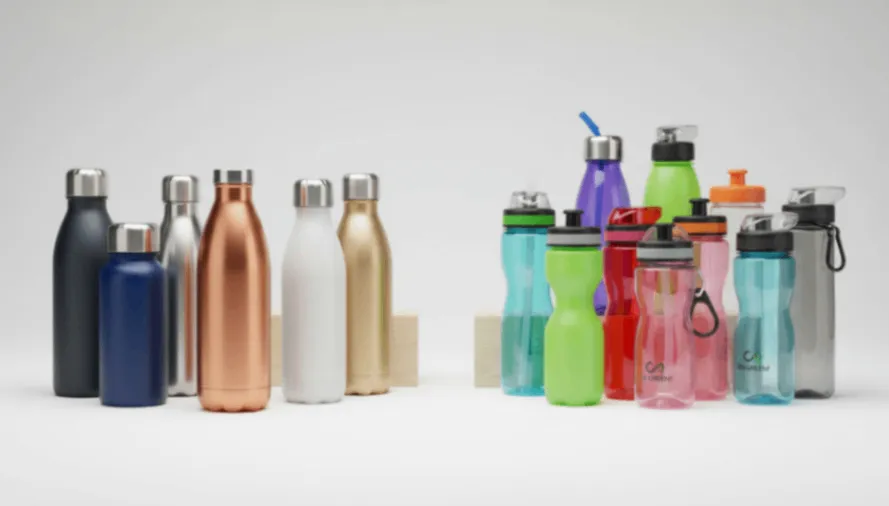
Stainless steel bottles cost $2.50-$7.00 per unit and are best for premium brands and long-term use. Plastic bottles cost $0.50-$3.00 and work well for promotional events and market testing. Your choice depends on your brand positioning and target customer.
I've spent over ten years at Cupique helping buyers choose the right bottle material. The question isn't which material is "better." The question is which material serves your business goals. Let me walk you through the real considerations that matter.
Stainless steel bottles are pricier for premium brands, while plastic is cheaper for promotions.True
The text specifies steel's higher cost for premium use and plastic's lower cost for promotional events.
Stainless steel bottles are always the best choice for all wholesale brands.False
The article states the best choice depends on brand positioning and target customer, not a universal best.
What is the Real Cost Difference When Buying Water Bottles in Bulk
The price tag you see is not the real cost. Many buyers focus only on the unit price and miss the hidden expenses.
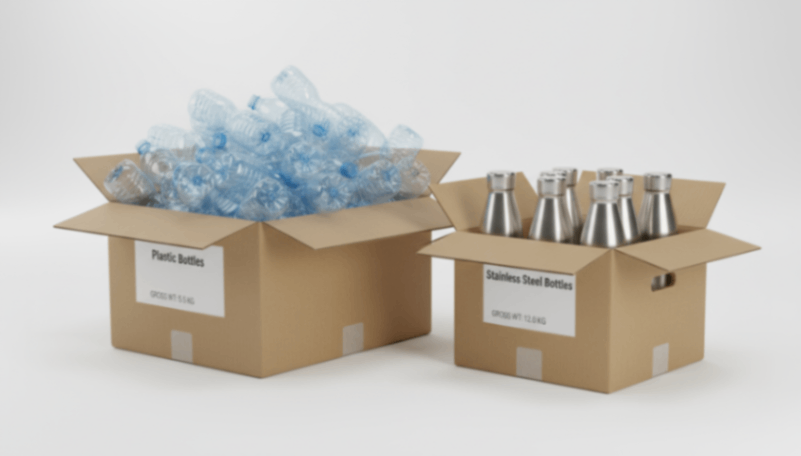
A plastic bottle costs $0.50-$3.00 per unit. A stainless steel bottle costs $2.50-$7.00 per unit. But the landed cost tells a different story. Steel bottles are heavier and bulkier, so shipping costs more per unit.
Understanding Landed Cost vs Unit Price
I recently worked with a buyer in Germany. He compared quotes. The plastic bottle was $1.20. The steel bottle was $4.50. He almost chose plastic. Then we calculated the full picture.
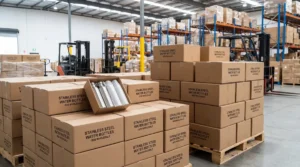
A 40-foot container fits 40,000 plastic bottles1. The same container fits only 20,000 steel bottles. The sea freight was $3,000. For plastic, the freight cost per unit was $0.075. For steel, it was $0.15. This doubled the shipping cost for steel.
But here's what he didn't expect. The plastic bottles had a 3% return rate2. Customers complained about staining and warping. The steel bottles had a 0.5% return rate. The complaints were minor, like small dents.
The Hidden Manufacturing Costs
| Cost Factor | Stainless Steel | Plastic |
|---|---|---|
| Unit Price | $2.50 - $7.00 | $0.50 - $3.00 |
| Scrap Rate | 2-5% (vacuum failures) | <1% (mature process) |
| Custom Mold Cost | $50,000+ (body shape) | $5,000 - $20,000 |
| Custom Color MOQ | 3,000 - 5,000 units | 1,000 - 2,000 units |
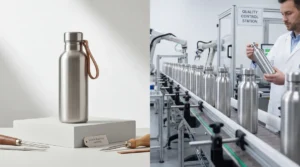
The steel bottle price includes failure costs. At our factory, the vacuum insulation process has a 2-5% failure rate3. Some bottles don't insulate properly. We scrap them. The cost gets added to the good units. Plastic molding is different. It's a mature process. The failure rate is under 1%. This keeps the unit cost predictable.
Customization Costs Are Different
For plastic, you pay upfront for the mold. It costs $5,000 to $20,000. After that, the per-unit cost is low. For steel, body shape tooling is too expensive. It can cost over $50,000. So most buyers customize the surface instead.
But surface customization has a catch. A custom Pantone powder coat color requires an MOQ of 3,000-5,000 units. Why? The factory needs to change the production line. They waste material during the changeover. Small orders don't justify this cost. Deep customization of steel is a volume game.
Unit price alone doesn't show the real cost; shipping impacts the total landed cost.True
The snippet highlights that 'landed cost tells a different story' due to shipping's impact on heavier items.
Bulk unit price is the only factor determining the total cost of water bottles.False
The text explicitly states 'hidden expenses' like shipping are crucial, and unit price isn't the 'real cost'.
Which Bottle is More Durable and Leads to Fewer Customer Complaints
Durability is not just about whether the bottle breaks. It's about the type of complaints you get and how they affect your brand.
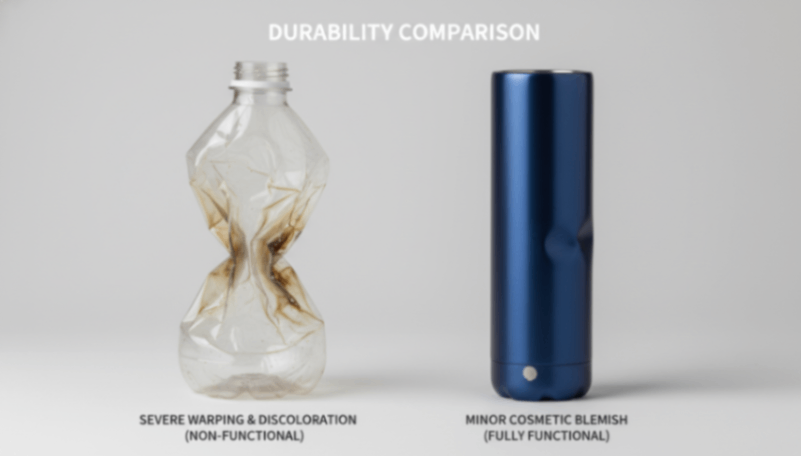
Plastic bottles generate functional complaints. Customers say the bottle retained smells or warped in the dishwasher. Stainless steel generates cosmetic complaints. The powder coating might chip or the bottle might dent, but it still works.
Functional Failures vs Cosmetic Issues
I track complaint data from our buyers. Plastic bottle complaints sound like this: "It retained the smell of coffee." "It warped in the dishwasher." "It cracked when I dropped it." These are critical failures. The bottle is unusable.
Steel bottle complaints are different: "The powder coating chipped." "It got a dent." The bottle still holds liquid. It still insulates. The customer might be annoyed, but they can keep using it.
There's one exception. Vacuum failure in steel bottles is a functional problem4. You can detect it. The bottle makes a rattling sound. That's the getter material breaking loose. When this happens, the insulation stops working. At Cupique, we test every batch to catch this before shipping.
Material Grade Makes or Breaks Durability
| Stainless Steel Grade | Nickel Content | Corrosion Resistance | Food Safety | Typical Use |
|---|---|---|---|---|
| 304 (18/8) | 8-10% | Excellent | Food-grade | Premium bottles |
| 201 | 1-2% | Poor (rusts easily) | Not recommended | Low-cost bottles |
Not all stainless steel is equal. The biggest source of unexpected complaints is rust. This happens when factories use 201 stainless steel instead of 304. They do this to cut costs.
I've seen this destroy brands. A buyer in Australia ordered 10,000 bottles. The factory used 201 steel without telling him. After three months, customers reported rust spots. The bottles had touched acidic drinks like lemon water. The 201 steel couldn't handle it.
304 stainless steel has 8-10% nickel content5. It resists corrosion. 201 steel has only 1-2% nickel. It rusts with acidic liquids. When you order, specify 304 steel. Ask for material test reports. Don't trust the price alone.
Structural Weak Points
Steel bottles have a weak point. It's the weld seam. The body is joined at one seam. The body is welded to the base. Low-quality welding creates microscopic leaks6. Temperature cycles cause stress fractures over time.
Plastic bottles like Tritan are one molded piece. They avoid weld issues. But plastic has its own problem. The polymer degrades. Micro-cracks appear over the bottle's lifespan. Both materials fail, just in different ways.
Plastic bottles lead to functional complaints, while stainless steel bottles cause cosmetic complaints.True
The text explicitly states plastic bottles generate functional complaints and stainless steel bottles generate cosmetic complaints.
Stainless steel bottles are more likely to become unusable than plastic bottles.False
Stainless steel bottles "still work" despite cosmetic damage, unlike plastic bottles which have functional issues.
How do Customization Options Differ for Steel and Plastic Bottles
Customization is where you make your brand stand out. But steel and plastic offer completely different creative possibilities.
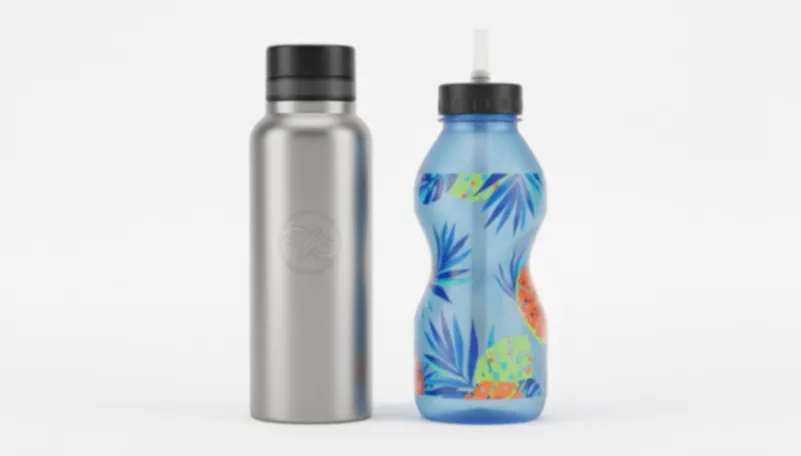
Steel excels in surface decoration techniques that feel permanent and premium. Plastic allows more structural freedom but the decoration often looks temporary. Each material suits different brand aesthetics.
The Perceived Value Gap
I've done an informal test. I gave people two bottles with the same logo. One was laser-etched on matte powder-coated steel. The other was screen-printed on plastic. I asked which brand they trusted more.
Over 80% chose the steel bottle. The laser etching feels permanent. It won't peel or fade. The screen print on plastic looks temporary. It feels like a promotional giveaway, not a premium product.
This perception directly impacts pricing power. A customer will pay $25 for a custom steel bottle7. They hesitate at $12 for a plastic bottle with the same logo. The material and decoration technique create this value difference.
Decoration Techniques Compared
| Technique | Works On | Durability | Cost Level | Best For |
|---|---|---|---|---|
| Laser Etching | Steel | Permanent | Medium | Minimalist logos |
| Powder Coating | Steel | High (if quality) | Medium-High | Full-body color |
| UV Digital Print | Steel | Medium-High | High | Complex graphics |
| Screen Printing | Both | Medium | Low | Simple, 1-3 color logos |
| Pad Printing | Both | Medium | Low | Small logos |
| Heat Transfer | Plastic | Medium-Low | Medium | Photo-realistic images |
The UV Digital Printing Revolution
A major innovation has changed what's possible with steel. It's UV digital printing. This allows full-wrap, multi-color graphics on cylindrical steel bottles. It used to be that vibrant, artistic designs only worked on plastic or with shrink-wraps.
Now I can offer a steel bottle with a complex floral pattern or a gradient design. It's more expensive than traditional printing. But it opens new markets. Lifestyle brands and artists can now use steel bottles. They're not limited to minimalist aesthetics anymore.
The Lid Ecosystem Strategy
The most overlooked customization opportunity is the lid. Smart brands create a single bottle body that works with multiple lid types. One customer might want a straw lid for the gym. Another wants a leak-proof cafe cap for coffee. A third needs a simple loop cap for transport.
I helped a brand develop this "lid system." They sold one bottle at a base price. Then they sold additional lids as accessories. The customer could swap lids based on their activity. This strategy works for both steel and plastic. But it's particularly powerful for justifying the premium price of a steel bottle. The bottle becomes a platform, not just a product.
Steel offers permanent, premium surface decoration, while plastic allows more structural customization freedom.True
The text states steel excels in permanent surface decoration and plastic in structural freedom.
Plastic bottle decoration generally appears more permanent and premium than steel bottle decoration.False
The text states plastic decoration often looks temporary, while steel offers permanent and premium finishes.
How Does the Bottle Material Affect My Brand's Image and Target Audience
The bottle material you choose sends a message about your brand. It's not just packaging. It's a statement of values.
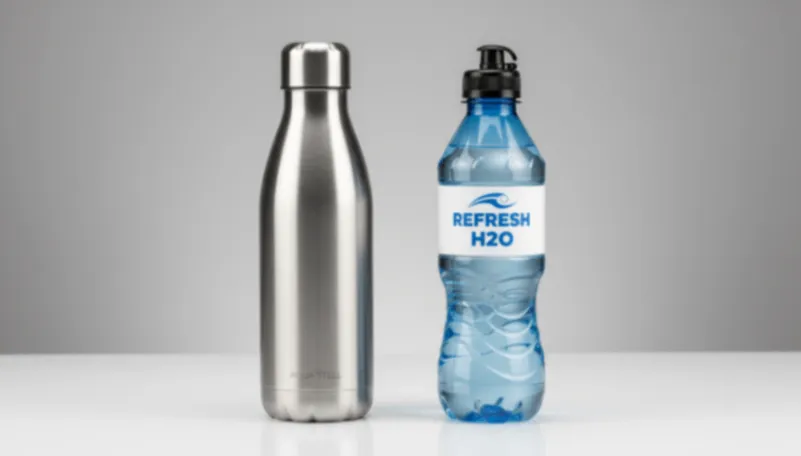
Stainless steel signals quality, durability, and environmental commitment. It aligns your brand with premium positioning. Plastic works for mass engagement and market entry. It allows you to reach more people at a lower cost.
Steel as a Brand Co-Sign
When a company puts its logo on a high-quality steel bottle, something interesting happens. The brand isn't just on the bottle. The brand becomes associated with the bottle's inherent qualities. Durability. Performance. Sustainability. I call this a "brand co-sign."
I work with tech companies, financial institutions, and outdoor brands. They almost always choose steel for corporate gifts and merchandise. Why? The bottle mirrors their desired image. A tech company wants to be seen as innovative and lasting. A steel bottle reinforces that message. A flimsy plastic bottle would contradict it.
One financial services client told me something that stuck with me. He said, "We manage people's retirement savings. We need to signal that we think long-term. A bottle that lasts 10 years sends that message. A plastic bottle doesn't."
Plastic for Trial and Conversion
Plastic bottles serve a different strategic purpose. They're ideal for market entry and mass engagement. A fitness brand can give away 5,000 branded Tritan shakers at a marathon. The low cost makes this possible.
The goal isn't a 10-year relationship with the bottle. The goal is a positive first interaction with the brand. You want runners to use the bottle, remember your brand, and later buy your premium products. Plastic enables this funnel strategy.
The Generational Divide
| Audience Segment | Material Preference | Key Drivers | Brand Message |
|---|---|---|---|
| Gen Z (18-27) | Strong preference for steel | Microplastic concerns, sustainability | "We walk the talk" |
| Millennials (28-43) | Preference for steel | Eco-values, quality over quantity | "Investment in sustainability" |
| Gen X (44-59) | Neutral, value-driven | Practicality, durability | "Reliable and functional" |
| Boomers (60+) | Mixed, price-sensitive | Familiarity, ease of use | "Tried and trusted" |
For younger demographics, the material is a statement. Millennials and Gen Z see stainless steel as an authentic commitment to reducing single-use plastics. A brand using steel is "walking the talk."
Reusable plastic is better than single-use. But the specter of microplastics and recycling challenges makes it less powerful. For environmentally-conscious audiences, steel is the stronger signal.
Bottle material significantly influences a brand's image, values, and target audience.True
The text states material sends a message, e.g., steel for premium, plastic for mass market.
Plastic bottle material primarily signals premium quality and environmental commitment.False
The text attributes premium/environmental signals to stainless steel, not plastic.
What Safety Certifications (like FDA, LFGB) are Needed for Wholesale Bottles
Safety certifications protect your business from liability and build customer trust. But not all certifications are equal.
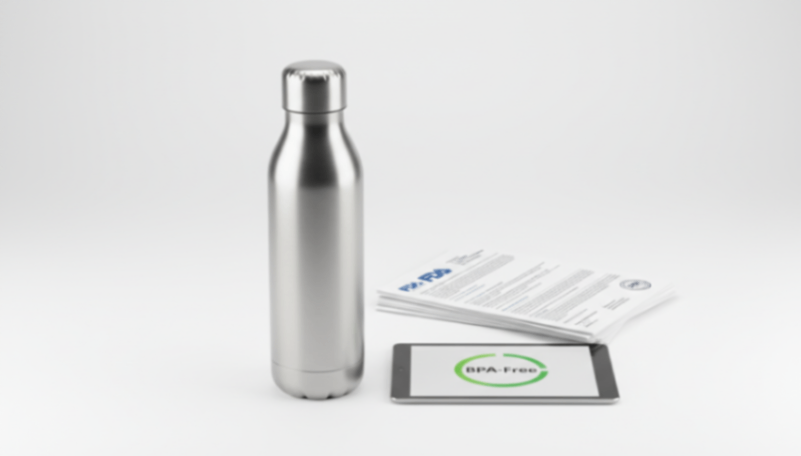
You need FDA (CFR 21) for US markets and LFGB for European markets. LFGB is stricter and tests for taste and smell transfer. For plastics, you must verify the absence of BPA, BPS, BPF, and other harmful substances.
LFGB as the Gold Standard
FDA (CFR 21) is the US standard. LFGB is the German standard. But LFGB is stricter. It tests sensory factors8. The material must not transfer taste or smell to the liquid. It also has tighter limits on substance migration.
I advise buyers to request LFGB-compliant products. If a product passes LFGB, it will almost certainly pass FDA and other national standards9. It's a risk mitigation strategy. You're not limiting yourself to one market. You're ensuring global compliance.
When a new buyer asks me about certifications, I don't just send the certificates. I explain what each test means. LFGB includes:
Beyond BPA-Free for Plastics
| Substance | Found In | Health Concern | Testing Standard |
|---|---|---|---|
| BPA (Bisphenol A) | Polycarbonate plastics | Endocrine disruptor | FDA, LFGB |
| BPS (Bisphenol S) | BPA-free plastics | Similar to BPA | LFGB, REACH |
| BPF (Bisphenol F) | Epoxy resins | Similar to BPA | LFGB, REACH |
| Phthalates | Plastic softeners | Reproductive toxicity | FDA, REACH |
For plastic bottles, "BPA-Free" is just the starting point. The problem is that some manufacturers substitute BPA with BPS or BPF10. These are also bisphenols. They have similar health concerns.
A comprehensive test report for plastic must verify the absence of a whole spectrum of plasticizers and endocrine disruptors. This requires transparency in the supply chain. The specific polymer formulation can be a trade secret. But you need to know what's in the material.
At Cupique, we work only with Tritan and food-grade plastics that have full substance disclosure. I've turned down cheaper plastic options because the supplier couldn't provide complete test data. It's not worth the risk.
The Certification vs Reality Gap
The certificate is only as reliable as the factory's process control. Here's a common risk: certification by sample. The factory sends a perfect sample for testing. They get the certificate. Then they use cheaper, non-compliant materials in mass production.
I've seen this firsthand. A buyer showed me a certificate for 304 stainless steel. But when we tested his actual order, it was 201 steel. The factory had submitted a 304 sample for certification but switched materials to cut costs.
Best practice is not just to get the certificate. You need:
This is where partnering with a reputable supplier matters. At Cupique, we allow buyers to conduct third-party testing on random samples from their order. Transparency is non-negotiable.
FDA is needed for US markets, LFGB for European markets; LFGB is the stricter standard.True
The text specifies FDA for US, LFGB for EU, and states LFGB is stricter and tests more.
FDA certification is universally stricter than LFGB for wholesale bottles.False
The section explicitly states LFGB is stricter than FDA and tests for taste and smell transfer.
What is the Typical Production Lead Time for a Bulk Order
Lead time planning can make or break your product launch or seasonal campaign. The stated production time is often just part of the picture.
Standard stainless steel bottles take 4-6 weeks. Plastic bottles take 2-4 weeks. But customization adds time. A custom powder coat color or new lid mold can extend the timeline to 8-12 weeks.
Raw Material Sourcing Drives the Timeline
The 4-6 week lead time for steel bottles includes a buffer for raw material sourcing. We need stainless steel coils or tubes. The prices of nickel and chromium are volatile. They're key components of 304 steel11.
Factories don't always hold massive inventory. We purchase raw materials after an order is confirmed. This can add 1-2 weeks. If the nickel price spikes, suppliers might delay delivery hoping for a price drop. This impacts your timeline.
Plastic is different. Polymer pellets are a more stable commodity. Suppliers keep larger inventories. Sourcing lead times are shorter.
The Holiday Factor
| Period | Impact on Lead Time | Planning Buffer Needed |
|---|---|---|
| Chinese New Year (Jan/Feb) | +3-4 weeks shutdown | Order 8-10 weeks ahead |
| Golden Week (Early Oct) | +1-2 weeks shutdown | Order 4-6 weeks ahead |
| Normal Production | Standard lead time | Order 6-8 weeks ahead |
Any experienced buyer knows that stated lead times are theoretical. They don't account for major Chinese holidays. Production stops during Golden Week in October. It stops for 3-4 weeks around Chinese New Year in January or February12.
Last year, a buyer contacted me in December. He needed 15,000 bottles delivered by late February. I had to tell him it was impossible. Chinese New Year was in late January. The factories would be closed for nearly a month. Even if we started immediately, we couldn't finish before the shutdown.
He had to delay his launch. The lesson: orders must be placed 8-10 weeks before Chinese New Year to avoid massive delays.
Customization Complexity is the Wild Card
A standard, in-stock steel bottle with a simple laser logo has a lead time of 2-3 weeks. We have the bottles. We just add the logo. It's fast.
But customization changes everything. An order requiring:
This can stretch to 8-12 weeks. Here's the breakdown:
- Lid mold production: 2-3 weeks
- Powder coat line changeover: 1 week
- Packaging sample approval: 1-2 weeks (with revisions)
- Mass production: 3-4 weeks
- Quality control and packing: 1 week
Buyers need to separate "production time" from "total project time." All the customization and approvals add up. Starting with a clear timeline and realistic expectations prevents disappointment.
Production lead times for bottles vary significantly based on material and customization.True
Lead times differ by material; customization also adds significant time.
All bulk bottle orders, regardless of customization, have a fixed, short production lead time.False
The text shows varying times for materials and that customization greatly extends lead times.
Which Water Bottle is Truly More Eco-Friendly
The simple answer is misleading. Both materials can be eco-friendly or wasteful. It depends on how they're used and disposed of.
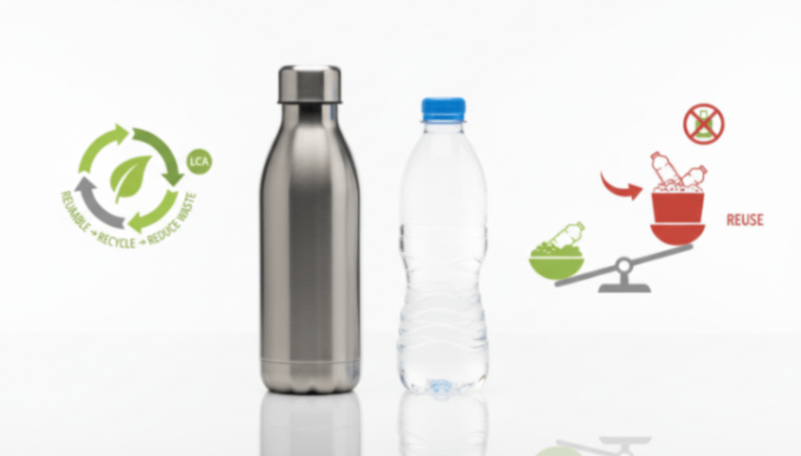
Stainless steel has a higher initial carbon footprint but lasts longer and is infinitely recyclable. Plastic has a lower production impact but faces recycling challenges. The real measure is the Life Cycle Assessment.
Life Cycle Assessment Tells the Full Story
A Life Cycle Assessment (LCA) looks beyond simple recyclability. It considers the energy-intensive mining and smelting of iron and nickel for steel. It compares this to fossil fuel extraction for plastic.
Steel's initial carbon footprint is higher. But the breakeven point is between 20-100 uses compared to a single-use plastic bottle13. Compared to a reusable plastic bottle, the breakeven point is higher. But steel's near-infinite recyclability changes the equation.
Steel can be melted and reformed into high-quality steel. It doesn't degrade. Plastic is often downcycled into lower-grade products. After a few cycles, it becomes waste.
The Recyclable vs Recycled Gap
| Material | Recyclability Potential | Actual Recycling Rate | End-of-Life Value |
|---|---|---|---|
| Stainless Steel | 100% | ~70-90% (global average) | High scrap value |
| Aluminum | 100% | ~50-70% | High scrap value |
| Tritan Plastic (Code 7) | Technically recyclable | <5% (infrastructure gaps) | Very low value |
| Glass | 100% | ~30-40% | Medium value |
Stainless steel is one of the most recycled m14aterials on earth. But consumer-grade water bottles aren't always properly disposed of. The good news is that the material itself has value. Even if it ends up in mixed scrap, it gets recycled. Steel is economically valuable as scrap.
Plastic's challenge is greater. Tritan is labeled as "recyclable" (Code 7 - OTHER). But very few municipal facilities can process it. Code 7 plastics are a mixed category. Most facilities don't have the sorting and processing technology. The actual recycled rate is near zero in many regions.
I'm honest with buyers about this. A Tritan bottle is better than single-use plastic. But it's likely going to a landfill at end-of-life. A steel bottle will likely get recycled, even if the user throws it in general waste. The scrap value ensures it gets pulled out.
The Recycled Steel Revolution
The next frontier is post-consumer recycled (PCR) stainless steel. Brands like Klean Kanteen use 90% certified recycled steel. This drastically lowers the product's initial carbon footprint.
At Cupique, we're developing relationships with certified recycled steel suppliers. For buyers, this creates a powerful marketing story. You can say: "Our bottles are made from 90% recycled steel and are 100% recyclable at end-of-life." This resonates with eco-conscious consumers.
The cost premium is currently 5-10% compared to virgin steel15. But as demand grows, this gap is narrowing. I predict that within 5 years, recycled steel will be the standard, not the premium option.
The eco-friendliness of water bottles depends on usage, disposal, and life cycle, not just material.True
The text states both materials can be eco-friendly or wasteful depending on how they're used and disposed of.
Stainless steel water bottles are always more eco-friendly than plastic ones.False
The text indicates plastic has a lower production impact, and eco-friendliness depends on the full life cycle.
Should I Consider Other Materials Like Glass or Aluminum for Wholesale
Steel and plastic dominate the market. But glass and aluminum serve specific niches where they excel.
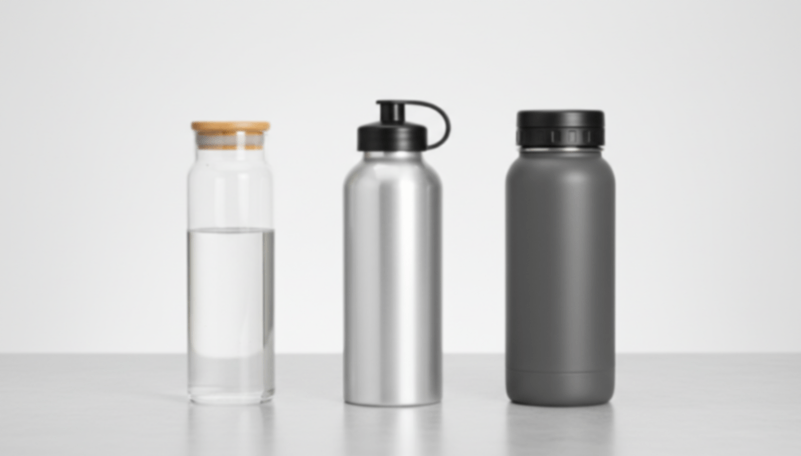
Glass offers taste purity and is ideal for desk bottles and wellness markets. Aluminum is extremely lightweight and perfect for mass events. Each material solves different problems for different audiences.
Glass: The Purity Play with Protection
Glass used to be fragile and impractical. But silicone sleeves changed this. The sleeve provides grip, impact protection, and a surface for branding. It turns fragility from a weakness into a design feature.
I've helped yoga studios and corporate wellness programs source glass bottles with custom sleeves. The target customer values taste purity. They don't want any material touching their water. Glass is inert. It doesn't retain flavors or leach substances16.
The sleeve allows for color customization and branding. It's a broad canvas. A glass bottle with a vibrant silicone sleeve is visually striking. It stands out on a desk or in a yoga studio.
Aluminum: The Lightweight Event Champion
Aluminum's advantage is weight. It's lighter than steel and even lighter than plastic in some designs. This makes it the best choice for mass-participation events. Concerts. Charity runs. Festivals. When you're distributing thousands of bottles, weight matters for logistics and shipping costs.
Aluminum dents easily17. It requires an internal coating. This coating is often epoxy or polymer-based. You need to verify its safety. But aluminum's recycling value is extremely high. Users are likely to recycle it. The scrap value ensures it gets captured in recycling streams.
The Niche vs Volume Decision
| Material | Best Application | Target Customer | Margin Level | Volume Potential |
|---|---|---|---|---|
| Stainless Steel | Insulated, long-term use | Premium brands, outdoor | High | High |
| Plastic (Tritan) | Promotional, gym/sports | Mass market, events | Low-Medium | Very High |
| Glass + Sleeve | Desk bottle, wellness | Yoga, corporate wellness | High | Medium |
| Aluminum | Event giveaways, lightweight | Festivals, mass promotion | Low | Very High |
The decision to source glass or aluminum is strategic. Glass serves a high-margin, lower-volume niche focused on aesthetics and taste purity18. Aluminum serves a lower-margin, high-volume market focused on portability and events.
Neither directly competes with insulated stainless steel. Steel's core value is thermal performance. But glass and aluminum are strong competitors to non-insulated steel and plastic. If you're not selling the insulation feature, you should consider them.
I recently helped a buyer launch a desk bottle line. We chose glass with bamboo lids and silicone sleeves. The margins were 40% higher than plastic. The volume was lower, but the profitability per unit made it worthwhile. It targeted a specific aesthetic preference that plastic couldn't match.
Glass and aluminum are best for niche markets like wellness or mass events.True
The text states they serve specific niches where they excel due to unique properties.
Glass and aluminum are direct replacements for steel and plastic in most applications.False
The text indicates they serve 'specific niches' and solve 'different problems', not general replacement.
Conclusion
The best material depends on your brand, your margin goals, and your customer. Stainless steel builds premium brands. Plastic enables mass reach. Glass and aluminum serve specific niches. Choose based on strategy, not just price.
-
Details volumetric storage, crucial for understanding container capacity and warehouse efficiency. ↩
-
Manufacturing guide for steel bottles, explaining their quality and low return rates. ↩
-
Explains industry standards and common failure rates for vacuum-insulated bottles. ↩
-
Confirms rattling sound indicates vacuum failure from getter material. ↩
-
Compares 304 and 201 stainless steel, detailing nickel content, corrosion, and applications. ↩
-
Details common welding defects and causes, explaining how low-quality work leads to structural issues. ↩
-
Details cost differences between steel and plastic bottles, affecting customer valuation. ↩
-
Explains LFGB's stricter requirements by comparing them to FDA standards. ↩
-
Compares LFGB and FDA standards, explaining why LFGB compliance implies FDA compliance. ↩
-
Explains bottle industry standards, which address bisphenol substitutes and associated health concerns. ↩
-
Explains factors influencing stainless steel prices, including components like nickel and chromium. ↩
-
Details the significant supply chain disruptions caused by Chinese New Year production halts. ↩
-
Compares environmental impact of reusable (steel) and single-use plastic water bottles. ↩
-
Details stainless steel's high recyclability and environmental sustainability. ↩
-
Explains stainless steel water bottle manufacturing costs, informing the discussed material cost premium. ↩
-
Explains industry standards for alternative container materials, relevant to inertness comparisons. ↩
-
Details industry standards for bottle materials, often requiring coatings for safety. ↩
-
Details stainless steel bottle manufacturing, contrasting with glass's aesthetic and taste purity niche. ↩